Samsung Induction Range Review: Best Models for 2025
Updated: 6 Jul 2026
216
Top Samsung Induction Range Picks
Samsung’s induction range lineup sits at the intersection of smart-home integration and serious cooking performance. Unlike gas or standard electric coil ranges, Samsung’s induction models use electromagnetic energy to heat cookware directly — which means faster boiling, more precise simmering, and cooler cooktops that are easier to wipe clean. Understanding which model suits your cooking style, kitchen layout, and budget is the real challenge. Here’s a breakdown of the key contenders currently in Samsung’s lineup.
Samsung primarily offers induction ranges in two tiers: the Bespoke series (premium, customizable panel colors) and the standard stainless lineup. The NE63BB8752US is the flagship Bespoke induction range, while the NE63T8751SS represents the prior-generation standard stainless option that remains widely available. For buyers considering a step down, the NE63A6511SS offers induction at a lower entry price but with fewer smart features.
Quick Comparison Table
| Model | Type | Key Spec | Price Range | Best For |
|---|---|---|---|---|
| NE63BB8752US | Bespoke Induction | 6.3 cu. ft., Virtual Flame, Wi-Fi | Typically $1,600–$2,000 | Most buyers; best overall value at premium tier |
| NE63T8751SS | Stainless Induction | 6.3 cu. ft., Flex Duo, Wi-Fi | Typically $1,400–$1,800 | Cooks who want Flex Duo oven splitting |
| NE63A6511SS | Standard Induction | 6.3 cu. ft., Self-Clean, Wi-Fi | Typically $1,100–$1,400 | Budget-conscious buyers entering induction |
| NE63BB8952US | Bespoke Induction (Pro) | 6.3 cu. ft., Pro handle, Virtual Flame | Typically $2,000–$2,400 | Design-focused buyers, professional aesthetic |
Prices fluctuate with retailer promotions and model-year transitions. Always verify current pricing at time of purchase. Samsung’s product lineup is detailed on Samsung’s official ranges page.
Specs Deep Dive
According to Samsung’s published specifications, most models in the current induction lineup share a 30-inch freestanding form factor with a 6.3 cubic foot oven cavity — one of the larger capacities in the freestanding range category. Here’s what distinguishes each model at the spec level.
NE63BB8752US (Bespoke) — Flagship Specs
- Cooktop: Five induction elements — 7″, 6″, 7″, 6″, and an expandable 6″/12″ dual-zone element (manufacturer-rated)
- Max element power: 3,700W on the largest burner (per Samsung specifications)
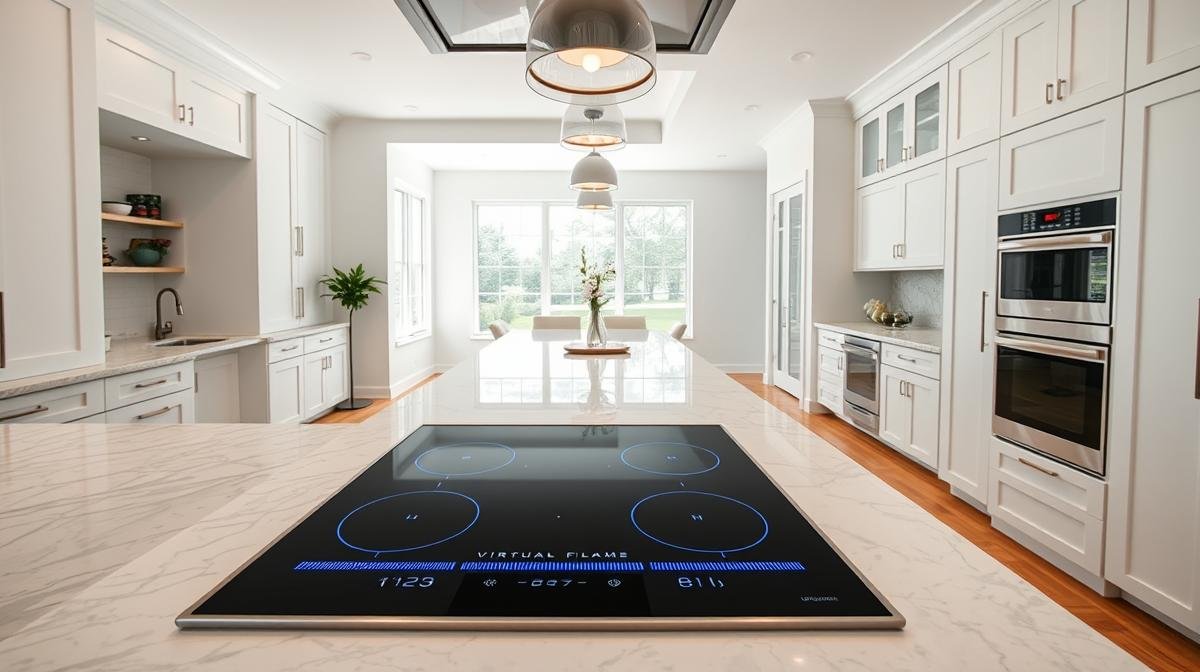
- Virtual Flame technology: LED lighting under the glass that simulates flame color and height, providing visual feedback during cooking
- Oven: 6.3 cu. ft., True Convection, Air Fry mode, Steam Bake, Flex Duo divider compatible
- Self-clean: Self-Clean + Steam Clean options
- Connectivity: Wi-Fi (SmartThings app), voice assistant compatible (Alexa, Google Assistant)
- Bespoke panels: Customizable door panel colors (Clementine, Navy, White Glass among others)
NE63T8751SS — Flex Duo Standout
- Cooktop: Five induction elements, similar layout to Bespoke tier
- Flex Duo: Oven includes a removable divider that splits the cavity into two independently controlled ovens — a practical feature for cooking at two temperatures simultaneously
- Oven: 6.3 cu. ft., True Convection, Air Fry mode
- Finish: Fingerprint-resistant stainless steel
- Connectivity: Wi-Fi, SmartThings compatible
NE63A6511SS — Entry Induction
- Cooktop: Five induction elements
- Oven: 6.3 cu. ft., True Convection, Air Fry
- Notable absence: No Flex Duo, no Virtual Flame — but retains Wi-Fi and SmartThings integration
- Best use case: Households transitioning from gas or radiant electric who want induction’s benefits without paying for premium aesthetics
Cooking Performance
Samsung’s induction cooktops perform consistently with the broader category advantages: faster boiling times than gas or radiant electric, more precise low-heat control, and a glass surface that doesn’t retain dangerous heat the way a radiant coil does. These are induction’s category-level benefits — Samsung’s specific implementation adds a few notable touches.
Boil Speed
According to Samsung’s published specifications, the 3,700W power burner on the NE63BB8752US is rated for rapid boiling performance. Induction’s electromagnetic transfer means energy goes directly into the pan rather than heating air around it — a meaningful efficiency advantage. The U.S. Department of Energy notes that induction cooking is approximately 5–10% more efficient than conventional electric smooth-top ranges, which can translate to modest energy savings over time.
Low-Heat Precision
One area where Samsung induction ranges commonly receive positive owner feedback is low-heat precision. Maintaining a true simmer — the kind needed for delicate sauces, chocolate, or grains — is significantly easier on induction than on gas burners, where flame modulation at very low settings can be inconsistent. For more on what simmer temperatures actually mean in practice, see our guide on simmer temperature on electric stove.
Virtual Flame Technology
Unique to Samsung’s premium Bespoke models, Virtual Flame uses LED illumination under the ceramic glass to provide visual feedback — the light changes color and intensity as you adjust power levels. This is a purely aesthetic feature (it does not affect cooking performance), but owners commonly report that it makes induction feel more intuitive for cooks accustomed to gas-range visual cues.
Oven Performance
The True Convection oven (a third heating element dedicated to circulating air) provides more even baking results than standard convection across Samsung’s lineup. The Air Fry mode — which uses convection at high heat to crisp foods — has become a standard Samsung feature and works consistently across the induction range lineup. The Flex Duo oven divider on the NE63T8751SS is a practical standout: it allows independent temperature control in upper and lower cavity zones, useful for households that frequently cook a full meal in one oven simultaneously.
Pros and Cons
What Samsung Induction Gets Right
- Design cohesion: Bespoke panel customization is genuinely differentiating — no other mainstream induction brand offers it at this price tier
- SmartThings integration: Remote preheat, temperature monitoring, and integration with Samsung’s broader smart-home ecosystem work reliably according to owner reports
- Oven capacity: 6.3 cu. ft. is generous for a 30″ freestanding range
- Air Fry mode: Included across the lineup without requiring a separate accessory rack purchase on most models
- Fingerprint-resistant finishes: Stainless models hold up well to everyday kitchen use based on commonly reported owner experience
Where Samsung Induction Falls Short
- Humming at low power: Induction cooktops can produce a faint buzzing or humming sound at low heat settings — this is normal across induction brands, not a defect. See our explanation of electric stove humming noise for context.
- Temperature control learning curve: Induction’s rapid response means overcooking is easy until you calibrate to the new system. Our guide on electric stove temperature control issues covers adjustment strategies.
- Cookware investment: Households with large aluminum or copper cookware collections will need to budget for replacement pots and pans
- Reliability data: According to Consumer Reports reliability surveys, Samsung appliances have historically scored below average compared to brands like LG and Bosch in some categories — worth considering for long-term ownership calculations
- Service network: Some owners in less urban areas report difficulty scheduling Samsung-authorized service calls
Who Each Model Is For
Choosing between Samsung’s induction models comes down to three factors: how much you cook, whether design customization matters, and whether smart-home integration is a priority rather than a novelty.
Choose the NE63BB8752US if:
- You want Samsung’s current best overall induction range and can budget $1,600–$2,000
- Visual feedback (Virtual Flame) matters for your cooking workflow
- You’re renovating a kitchen and want customizable panel colors to match cabinetry
- SmartThings integration is genuinely part of how you use your home, not just a checkbox
Choose the NE63T8751SS if:
- Flex Duo — the ability to split the oven into two independent temperature zones — matches how you actually cook
- You want a full-featured Samsung induction range without paying the Bespoke design premium
- Standard stainless finish fits your existing kitchen aesthetic
Choose the NE63A6511SS if:
- You want the core benefits of induction cooking at a more accessible price point
- Virtual Flame and Bespoke panels are not priorities
- This is your first induction range and you want to enter the category without over-investing
All three models share induction’s fundamental safety advantages — no open flame, faster cooktop surface cooling after use, and the absence of combustion byproducts. For households concerned about kitchen safety more broadly, our guides on electric stove safety risks and how to turn off a stove cover best practices applicable to all induction ranges.
If you frequently cook at low, sustained temperatures — stocks, braises, candy making — induction’s low-end precision is a genuine upgrade over gas. Our resource on maintaining medium heat on electric stoves explains the heat-management principles that apply directly to induction use.
For a broader look at Samsung’s induction range specifications, Samsung’s official product pages include current spec sheets, energy certifications, and available color options for each model.
Frequently Asked Questions
Do Samsung induction ranges require special cookware?
Yes. Samsung induction ranges — like all induction cooktops — require magnetic cookware to function. Cast iron, enameled cast iron, and magnetic stainless steel all work. Aluminum, copper, ceramic, and glass cookware will not heat on an induction surface unless they have a magnetic base. A simple test: if a refrigerator magnet sticks firmly to the bottom of your pot, it will work on induction.
What is Samsung Virtual Flame technology?
Virtual Flame is a Samsung-exclusive feature on Bespoke induction models (such as the NE63BB8752US). It uses LED lighting beneath the ceramic glass cooktop surface to display a simulated flame that changes color and size as you adjust the power level — from blue at low heat to orange-red at high heat. It is a visual feedback tool only and has no effect on cooking performance or heat output.
Why does my Samsung induction range make a humming or buzzing noise?
A low hum or buzz during induction cooking is normal and common across all induction brands — it is caused by the electromagnetic energy interacting with the metal in your cookware, particularly at low and medium power settings. It is not a defect. The sound typically becomes less noticeable at higher power settings. If the humming is loud or accompanied by error codes, consult Samsung support, as that may indicate a separate issue.
What electrical requirements do Samsung induction ranges need?
According to Samsung’s published installation specifications, their induction ranges require a dedicated 240V electrical circuit rated at 40–50 amps with a 4-prong outlet (NEMA 14-50R configuration is common). Homes currently set up for gas ranges will need a licensed electrician to install the proper circuit. This is a one-time infrastructure cost that varies by home and local labor rates.
How does the Samsung Flex Duo oven work on induction ranges?
The Flex Duo system — available on models like the NE63T8751SS — includes a removable oven divider that physically splits the oven cavity into two separate zones: an upper oven (approximately 2.6 cu. ft.) and a lower oven (approximately 3.7 cu. ft., manufacturer-rated). Each zone has independent temperature control, so you can bake a casserole at 350°F in the lower oven while broiling in the upper simultaneously. Remove the divider and the full 6.3 cu. ft. cavity is available as a single oven.
Please Write Your Comments