Electric Stove Buzzing or Humming? 8 Causes + Fixes
Updated: 2 May 2026
1718
Quick answer: An electric stove buzzing or humming noise is usually caused by one of eight things: cookware that isn’t flat, normal coil expansion, an induction coil vibrating against the pan, a worn infinite switch cycling power, a loose terminal connection, a failing relay, a built-in cooling fan, or AC line hum. Faint clicks and brief crackles are normal; a continuous loud buzz is not.
A buzzing or humming electric stove is one of the most reported noise complaints in residential cooking appliances, and the reason it’s so common is that there are at least eight unrelated mechanisms that can produce the same sound. Some are harmless physics — metal expanding under heat, a magnetic field flexing a steel pan — while others point at a worn switch or a loose connection that genuinely needs attention. The good news is that you can usually narrow the cause down in under five minutes by listening to when the noise happens and how it changes when you remove the pan or rotate the dial.
This guide walks through every common source of an electric stove buzzing or humming noise, separates the normal cycling sounds from the ones that warrant a service call, and gives you a safe diagnostic sequence you can run yourself before paying anyone to look at it.
Normal Sounds vs. Concerning Sounds
Before you start tearing into the appliance, calibrate your ear. Modern electric and induction cooktops make several sounds during normal operation, and confusing one of those for a fault is the single most common reason homeowners overpay for service calls.
| Sound | Likely meaning | Action |
|---|---|---|
| Faint click every 10-30 seconds | Infinite switch cycling burner power on and off | Normal |
| Brief crackle when burner first heats | Coil metal expanding against its bracket | Normal |
| Soft hum at higher induction settings | Magnetostriction – the pan vibrating in the magnetic field | Normal; try a different pan |
| Whoosh of a small fan in a built-in unit | Internal cooling fan protecting the electronics | Normal |
| Continuous loud buzz, even with no pan | Electrical fault – switch, relay, or terminal | Diagnose; possibly call a tech |
| Sizzling, popping, or burnt-plastic smell | Possible arcing or melted insulation | Stop using; cut breaker; call a tech |
If you’re not sure where your stove falls on this spectrum, our broader guide to common electric stove problems lists the symptoms that most often get misread, including the difference between a true buzz and the bimetal click of a thermostat.
Cause 1: Cookware Not Flat on the Burner
The simplest cause is also the most common. A pan with a slightly warped base – even a warp you can’t see – will rock against a coil burner or rest unevenly on a smooth-top, and the rapid heating-and-cooling cycle of the element will set up a low-frequency vibration that reads as a buzz or rattle. Cast iron, thin stainless, and old aluminum pans are repeat offenders because they warp from thermal shock more readily than tri-ply or thick-base cookware.
Diagnostic test: turn the burner off, lift the pan, and listen. If the noise stops immediately and only returns when the same pan is on the same burner, the pan is the source. Lay it base-down on a flat countertop or piece of glass; if you can rock it or see daylight under any part of the rim, it’s warped.
Cause 2: Coil Expansion and Contraction
An exposed coil burner is a Calrod-style element: a tightly wound resistance wire packed in magnesium-oxide insulation inside a steel sheath. When current flows, the sheath heats from roughly room temperature to several hundred degrees Fahrenheit in under a minute, and the metal expands against the brackets that hold it in place. That expansion produces the brief crackle, tick, or short hum many owners hear during the first 30 to 60 seconds of heating.
This is normal physics, not a defect. It is also more pronounced on older coils whose brackets have loosened slightly over years of cycling. If the sound only occurs during warm-up and disappears once the burner reaches its set temperature, leave it alone. If it persists at steady-state, look further down this list.
Cause 3: Induction Magnetic Vibration
Induction cooktops generate heat by inducing eddy currents in the base of a ferromagnetic pan. The magnetic field oscillates at roughly 20-60 kHz depending on the manufacturer, and at high power settings the field is strong enough to physically flex the pan’s base – a phenomenon called magnetostriction. The result is a hum or buzz that sounds like it’s coming from the cooktop but is actually coming from the pan itself.
The hum is louder when:
- The pan is multi-ply (an aluminum or copper layer sandwiched between steel sheets vibrates more than solid stainless).
- The power level is set above roughly 70%.
- The pan base is light or thin.
- Two adjacent burners are running at high power simultaneously, putting their coils into a beat-frequency interaction.
Swap to a heavier single-layer cast-iron or thick-base stainless pan and the noise typically drops to a whisper. For more on the trade-offs between induction and resistive electric, see our comparison of induction vs electric stoves.
Cause 4: Failing Infinite Switch
Every coil and most smooth-top burners are controlled by an infinite switch – a bimetal device that turns the burner on and off rapidly to average the heat at your dial setting. A healthy infinite switch makes a soft click roughly every 10 to 30 seconds. A failing one can buzz continuously, click much more rapidly than normal, or arc internally as the contacts wear.
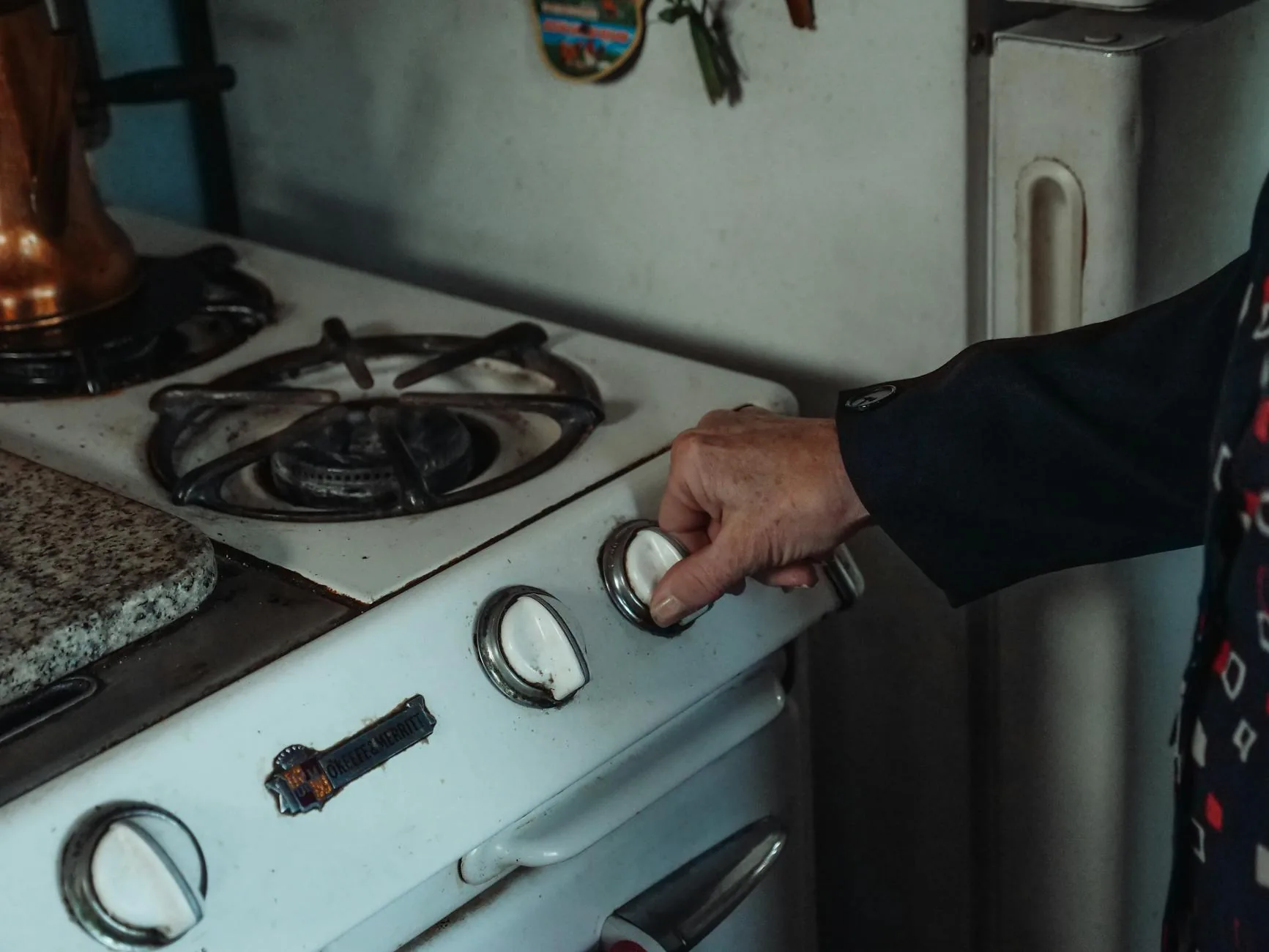
Telltale signs of a failing infinite switch include:
- The burner runs full-blast regardless of dial position, or barely heats at all.
- The hum changes pitch as you turn the knob.
- The knob feels hot or smells faintly of warm plastic.
- The clicking cadence is much faster than your other burners.
Infinite switches are inexpensive parts and are usually accessed from behind the control panel. However, they sit on the high-voltage side of the appliance, so if you are not comfortable confirming the breaker is off and using a non-contact voltage tester before touching wiring, this is a job for a technician. For background on related symptoms, our guide to fixing electric stove temperature control issues covers the same component from the heat-control side.
Cause 5: Loose Terminal or Wire Connection
Behind the back panel of every range is a terminal block where the 240-volt feed lands, plus a maze of high-current wires running to each element and switch. Over years of thermal cycling, screw terminals can loosen, push-on quick-connect fittings can lose tension, and aluminum-to-copper interfaces (uncommon but present in some older installations) can develop oxidation. The result is intermittent contact – and intermittent contact under load buzzes, hums, and in worst cases arcs.
Symptoms that point at a loose connection:
- The hum is louder when one specific burner is on.
- It worsens at higher power settings and disappears at low.
- Lights in the kitchen flicker briefly when the burner cycles.
- Breaker has tripped once or twice unexplained.
The U.S. National Electrical Code (NFPA 70) requires terminal connections in 240 V appliance feeds to be torqued to manufacturer specification, and loose lugs are a documented fire-cause category in residential range fires. This is not a DIY repair. Disassembling a terminal block requires the breaker locked off, a verified de-energized condition, and torque-spec tightening with the correct screwdriver – call a licensed appliance technician or electrician.
Cause 6: Worn Relay or Contactor
On smooth-top and induction ranges, an electromechanical relay (or, in newer models, a solid-state relay) switches each burner’s power. A healthy relay closes silently or with a single soft click. A worn relay whose contacts are pitted from years of arcing will buzz at the AC line frequency – a steady 60 Hz hum in North America, 50 Hz in most of the rest of the world – because the contacts can no longer hold firmly closed against the magnetic pulse.
Diagnostically, relay buzz is distinctive: it is steady, mechanical, often comes from one specific area of the control board, and gets louder when the affected burner is energized. Replacement requires removing the cooktop or back panel and is generally a technician job because the relay sits on the main control board.
Cause 7: Cooling Fan in Built-In Models
Most slide-in and built-in electric ranges, and essentially all induction cooktops, have a small cooling fan that runs whenever the electronics get warm. It often keeps running for several minutes after you shut the burner off, which surprises owners who think a quiet stove should be a silent stove. A healthy fan makes a steady whoosh; a failing fan with a worn bushing buzzes, rattles, or chirps.
Test by listening at the back vent or under the cooktop after a cooking session. If the noise correlates with the fan running and stops when the fan finally cycles off, the fan is your source. Replacement fans are inexpensive and accessible from the back panel on most models, but again – only attempt this if you can verify power is off at the breaker.
Cause 8: AC Voltage Line Hum
Finally, sometimes the buzz isn’t really the stove – it’s the electrical service feeding it. A high-current 240 V appliance pulls hard on the panel, and if the incoming voltage is unstable, if a neutral is loose at the panel, or if your home shares a transformer with a neighbor running a heavy intermittent load, you can get a low-frequency hum that the range’s metal cabinet amplifies like a guitar body.
Signs this is your culprit:
- Other appliances (refrigerator, microwave) hum more than they used to.
- Lights dim noticeably when the stove cycles on.
- The hum follows a daily pattern (worse at peak hours).
This is a service-entrance issue, not an appliance issue. Contact your utility for a free voltage check at the meter, or hire a licensed electrician to inspect the panel. While you wait, our piece on choosing the right circuit breaker size for an electric stove covers the load-side fundamentals.
When to DIY vs. Call a Technician
Use this triage to decide whether to keep troubleshooting or pick up the phone:
| Symptom | Action |
|---|---|
| Buzz only with one specific pan | Replace the pan |
| Brief crackle on warm-up only | Normal – leave it |
| Hum at high induction settings, quiet at low | Try a heavier pan; otherwise normal |
| Continuous buzz from control panel area | Likely infinite switch or relay – technician |
| Hum with any burnt smell or discoloration | Cut breaker, stop using, technician |
| Lights flicker or breaker has tripped | Electrician – possible loose terminal or service issue |
| Fan-area noise after cooking | Cooling fan – DIY only if comfortable with breaker work |
The general rule, drawn from UL safety standards for household cooking appliances and reinforced by every major manufacturer’s service literature: anything that involves opening the back panel, the terminal block, or the control board belongs to a qualified technician. Anything you can diagnose by lifting a pan, swapping cookware, or listening from a safe distance is fair game for a homeowner.
And before you assume the worst about a noisy electric stove, remember that many of the symptoms in this guide are signs the appliance is doing its job. The clicking is a thermostat. The crackle is steel expanding. The faint hum is a magnetic field flexing a pan. Calm diagnosis beats panicked replacement every time. If you’re trying to decide whether your noisy unit is even worth fixing, our overview of the advantages and disadvantages of electric stoves is a good sanity check before you commit to a service call.
FAQ
Is it safe to keep using an electric stove that’s humming?
If the hum is faint, only present at high power, and goes away when you lift the pan, yes – it is almost certainly normal magnetostriction or a cycling switch. If the hum is continuous, loud, or accompanied by any burnt smell, flickering lights, or breaker trips, stop using the affected burner until a technician inspects it.
Why does my electric stove only buzz on high heat?
High-heat-only buzzing usually points at one of three things: an induction coil interacting with a thin or multi-ply pan, an infinite switch whose contacts are pitted but still functional at low settings, or a marginal terminal connection that only buzzes under heavy current draw. Try a different, heavier pan first to rule out the cookware.
Can a buzzing stove cause a fire?
A buzzing pan or a normal cycling switch will not. A loose terminal connection or an arcing relay can – loose 240 V connections are a documented fire-cause category in residential ranges per NFPA fire incident data. That is why the rule of thumb is: if the noise comes from the back of the appliance and is accompanied by any heat, smell, or flickering, cut the breaker.
How long should an infinite switch last?
Manufacturer-rated lifespans vary by model, but most infinite switches are designed for tens of thousands of cycles, which translates to many years of typical residential use. Switches on the most-used burner usually fail first; if your stove is past the decade mark and the front-right element is the noisy one, that is the suspect.
Does an induction stove hum more than a coil stove?
Yes, at high power, because magnetostriction is intrinsic to how induction works. The fix is heavier and flatter cookware, not a service call. At low and medium power most quality induction cooktops are essentially silent except for the cooling fan.
Should the cooling fan keep running after I turn the stove off?
Yes. Built-in and induction units routinely run their fans for several minutes after shutdown to protect the electronics from residual heat. This is documented in nearly every manufacturer’s use-and-care guide and is normal behavior, not a fault.
Please Write Your Comments