When upgrading a residential kitchen, selecting the right cooking appliance represents one of the most critical long-term decisions a homeowner can make. KitchenAid gas ranges occupy a unique and highly coveted position in the appliance ecosystem: bridging the gap between standard mass-market consumer ranges and ultra-premium commercial appliances that cost upwards of double the retail price. For detailed technical specifications and official model documentation, explore KitchenAid Official.
Known for their heavy-duty aesthetic, signature die-cast metal knobs, and professional-grade cooktops, KitchenAid ranges are engineered for passionate home cooks who desire restaurant-style thermal firepower without sacrificing household reliability or intuitive controls. Whether you are evaluating a standard 30-inch slide-in unit or an expanded 36-inch commercial-style model, KitchenAid delivers a compelling blend of heavy-gauge stainless steel construction, precise dual-ring burner control, and sophisticated baking technologies.
Before purchasing a new appliance, it is immensely valuable to evaluate how gas ranges compare against alternative heating platforms by reading our comprehensive analysis on Gas vs Electric vs Induction Stoves.
📋Table of Contents
2. Cooktop Architecture & Burner BTU Output
The centerpiece of any high-performance gas range is its cooking surface. KitchenAid equips its commercial-style ranges with versatile burner configurations designed to handle diverse culinary tasks simultaneously—from flash searing thick steaks to gently holding delicate sauces without scorching.
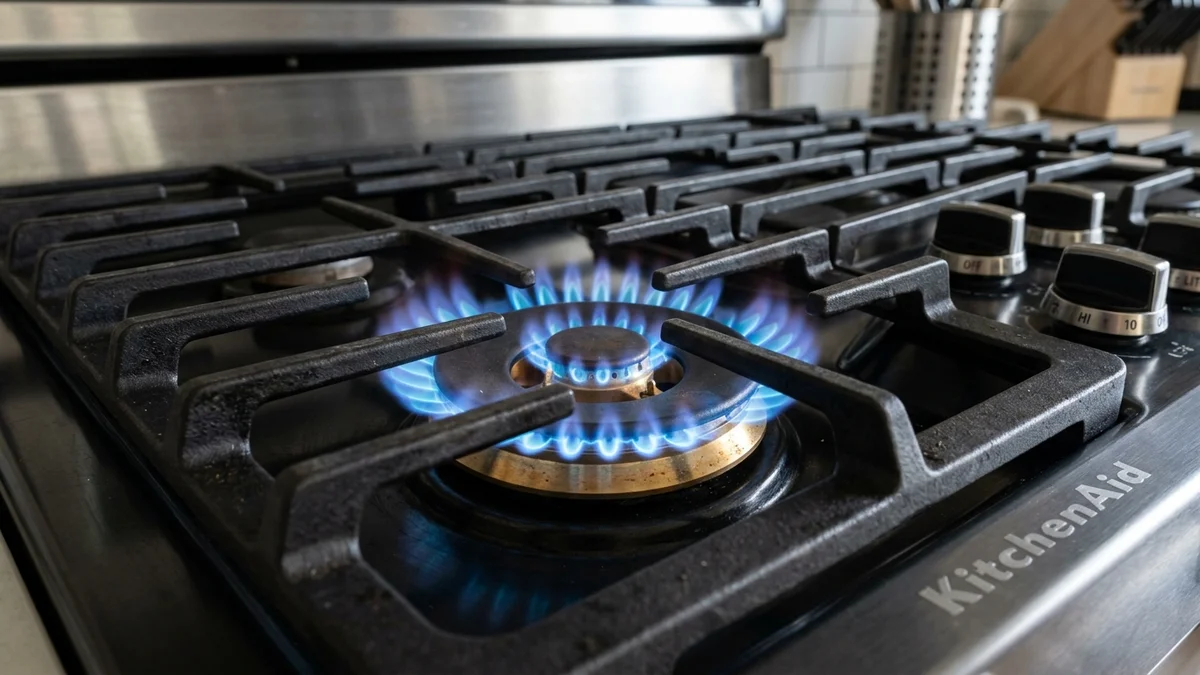
The top-tier burner on KitchenAid commercial ranges is the 20,000 BTU Ultra Power™ Dual-Flame Burner. Featuring two concentric rings of gas ports, this element can generate massive thermal energy for high-temperature wok cooking or rapid water boiling, bringing a 6-quart stockpot to a boil significantly faster than standard 12,000 BTU burners.
Simmer Precision & Flame Control
Power is only half the equation in high-end cooking; control at lower temperatures is equally vital. KitchenAid simmer burners are capable of stepping down to 500 BTUs. This sub-simmer thermal level ensures that delicate chocolate, béarnaise sauce, or slow-simmering marinara hold perfectly without bubbling over or scorching the bottom of your cookware. To master heat control across all flame levels, check out our guide on Gas Stove Heat Settings Explained.
Continuous Cast-Iron Grates
Covering the entire cooktop surface are heavy-duty, porcelain-coated cast-iron grates. The continuous edge-to-edge design enables cooks to slide heavy iron Dutch ovens and stockpots effortlessly between burners without lifting, improving both kitchen ergonomics and safety.
3. Oven Capacity & Even-Heat™ True Convection
While surface burners handle pan searing and boiling, the oven cavity handles roasting, broiling, and precision baking. KitchenAid gas ranges feature generous oven capacities ranging from 5.1 to 6.3 cubic feet, accommodating large holiday turkeys, multiple baking sheets, or multi-tier casserole dishes simultaneously.
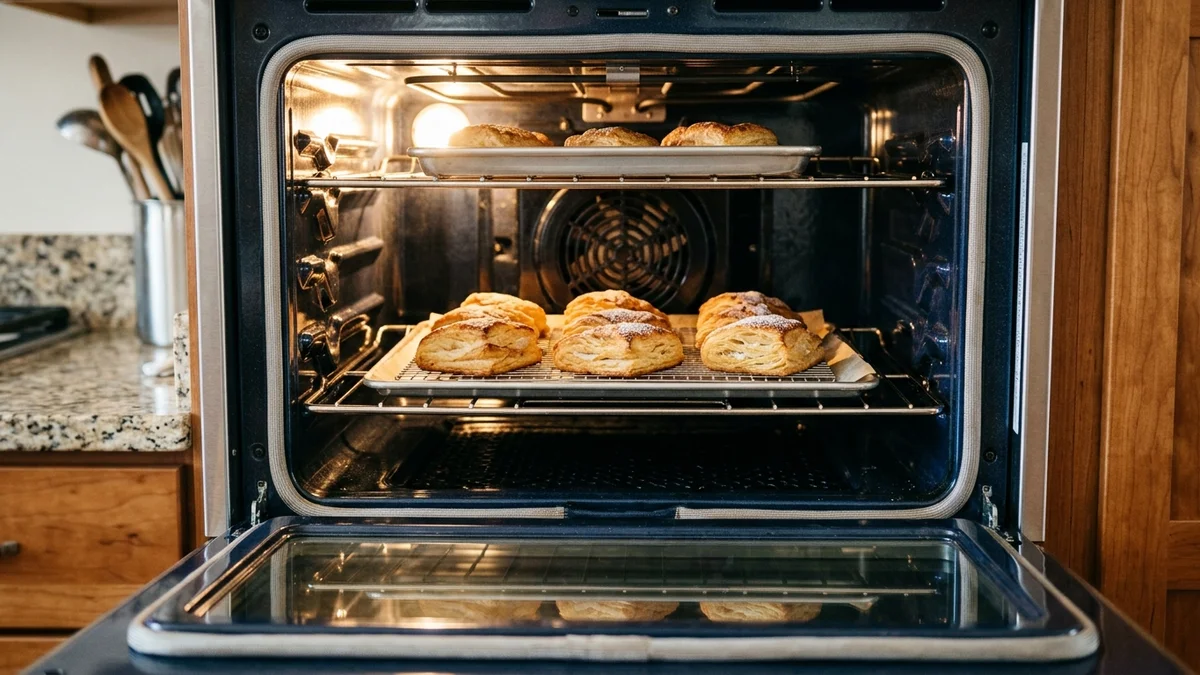
Spacious KitchenAid oven cavity equipped with Even-Heat™ True Convection fan shroud.
Even-Heat™ True Convection Technology
Unlike standard convection systems that simply use an internal fan to blow air around, KitchenAid utilizes Even-Heat™ True Convection. This system integrates a dedicated third heating element positioned directly behind a bow-tie fan shroud. The fan actively draws air past the heating element and circulates it evenly throughout the entire oven chamber.
Uniform Heat Distribution: Eliminates hot and cold pockets across top, middle, and bottom racks.
Multi-Rack Baking Consistency: Allows three sheets of cookies to bake evenly at the exact same rate.
Convection Conversion: Automatically converts standard recipe temperatures and times for convection mode.
Energy-conscious consumers will appreciate that modern thermal insulation standards adhere to guidelines established by Energy Star for household appliances.
4. Build Quality, Materials & Ergonomics
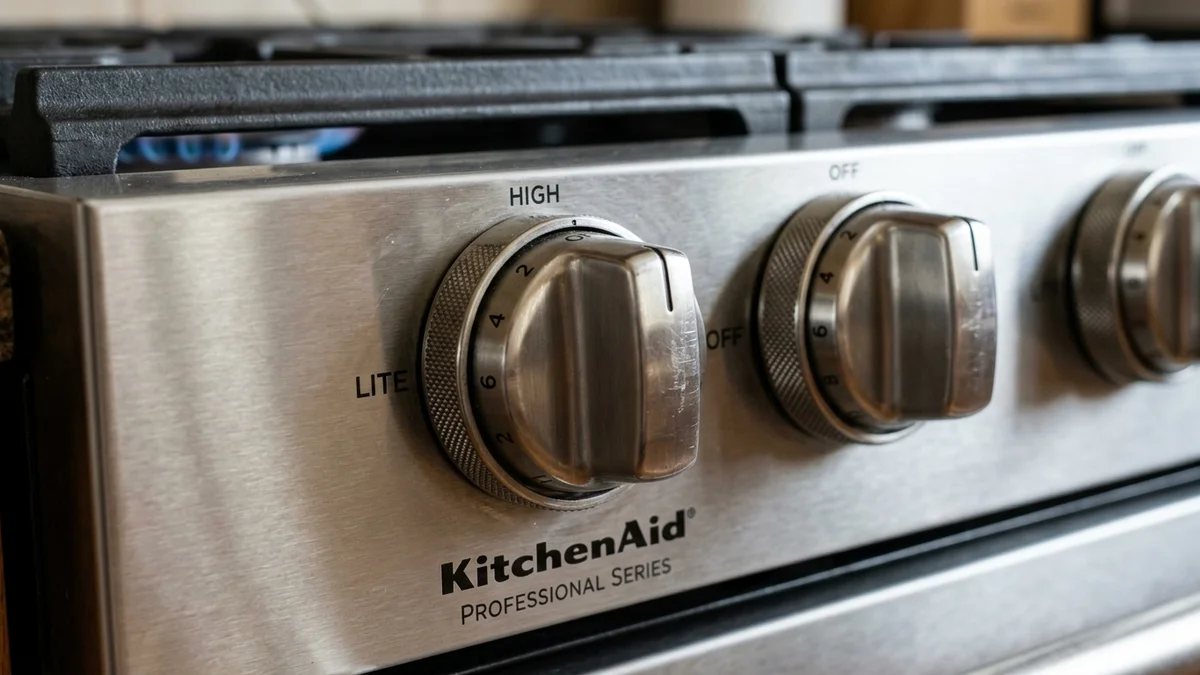
One touch of a KitchenAid range reveals its robust engineering. The exterior chassis is crafted from heavy-gauge brushed stainless steel that resists denting and structural flex. The control panel features solid die-cast metal knobs with satin-textured grips that provide positive, tactile feedback when adjusting burner flames.
Heavy-duty die-cast metal control knobs featuring KitchenAid satin-textured handles.
The oven door incorporates heavy-duty hinges designed to maintain a tight seal over decades of daily use. Furthermore, the glass cooktop surface features KitchenAid’s specialized CookShield Finish, an enamel coating that prevents high-heat discoloration and keeps stainless steel surfaces looking brand new.
5. Installation, Ventilation & Gas Line Setup
Proper installation is paramount when adding a high-output commercial gas range to your home kitchen. Because KitchenAid commercial ranges generate up to 20,000 BTUs per burner, home ventilation must be sized accordingly to maintain indoor air quality and manage grease combustion byproducts.
Ventilation Requirements
For high-output gas cooking, an overhead range hood providing a minimum of 400 to 600 CFM (Cubic Feet per Minute) is strongly recommended. Proper ducting ensures smoke, moisture, and carbon monoxide are safely vented outside your living space.
Gas Line & Electrical Connections
KitchenAid ranges operate on standard Natural Gas lines at 5 to 8 inches water column pressure, but include Liquid Propane (LP) conversion orifices out of the box. Electrical ignition systems require a standard 120V grounding electrical outlet. Always hire a licensed plumber or gas technician to perform fuel line hookups.
6. Maintenance, Cleaning & Long-Term Care
Maintaining a commercial-style gas range requires regular upkeep to preserve optimal gas flow and pristine appearance:
Cleaning Burner Caps & Igniters: Remove burner caps monthly and clear gas ports using a stiff nylon brush. Avoid wire brushes that scratch brass ports.
Caring for Cast-Iron Grates: Wash grates in warm soapy water. Never place hot cast-iron grates in cold water, as thermal shock can crack the enamel coating.
CookShield Surface Maintenance: Wipe down stainless steel surfaces after cooking using a microfiber cloth and specialized stainless steel polish.
7. Common Operating Questions & Troubleshooting
Occasional operational questions can arise during daily cooking. If you experience clicking igniters that fail to light, check for moisture trapped around the igniter electrode after cleaning. Allowing the cooktop to dry thoroughly usually resolves clicking immediately.
If you encounter uneven burner flames or flame yellowing, verify that burner caps are seated completely flat over the burner heads. For additional gas safety tips and troubleshooting guides, explore our article on Budget Gas Stove Buying Guide.
8. Pros and Cons Breakdown
Pros
Cons
✔ High-output 20,000 BTU dual-ring burner for intense heat
✖ Premium price point higher than entry-level appliances
✖ Heavy cast-iron grates require effort to lift when cleaning
✔ Solid die-cast metal knobs and commercial stainless build
✖ Slide-in depth may extend 1–2 inches past standard cabinets
✔ Continuous edge-to-edge grates simplify pan movement
✖ High-output burners require a powerful range hood (400+ CFM)
9. KitchenAid vs. Competitor Brands
When shopping for a commercial-style gas range, buyers often weigh KitchenAid against competing pro-sumer brands:
KitchenAid vs. Wolf: While Wolf ranges represent the gold standard in luxury ranges (as detailed in our Wolf Gas Range Review), KitchenAid delivers nearly 85% of Wolf’s thermal performance at less than half the retail price.
KitchenAid vs. Budget Brands: Compared to standard budget options, KitchenAid offers vastly superior BTU capacity, heavier metal knobs, and more precise convection baking.
10. Final Verdict & Buying Recommendations
The KitchenAid Gas Range is an outstanding choice for culinary enthusiasts seeking high-end performance, rugged build quality, and timeless stainless steel styling without paying top-tier luxury brand prices. Its combination of 20,000 BTU dual-flame burners and Even-Heat™ True Convection makes it one of the best overall values in the premium appliance market.
Please Write Your Comments