Wolf Gas Range Review: All-Gas vs. Dual Fuel Models, Burners & Buyer’s Guide (2026)
Updated: 27 Jul 2026
153
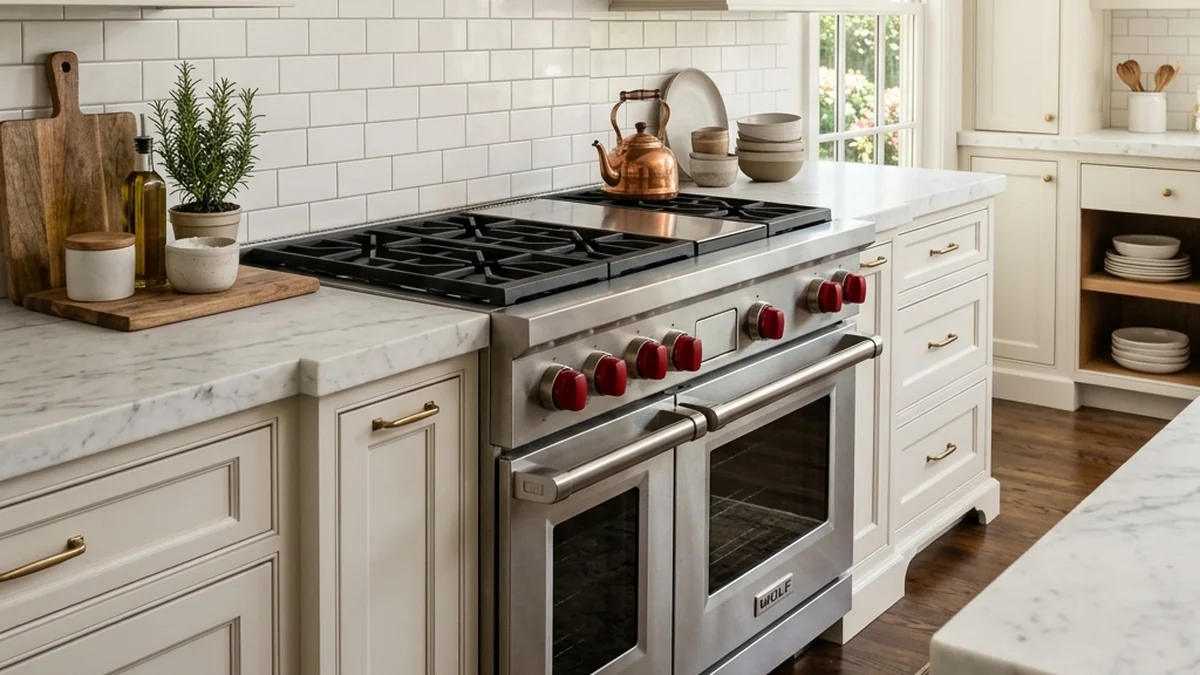
Wolf gas ranges are premier luxury cooking appliances renowned for their dual-stacked sealed brass burners delivering up to 20,000 BTUs alongside unmatched 300 BTU simmer precision. Built in Wisconsin with iconic red control knobs and heavy-gauge stainless steel, Wolf offers both All-Gas (GR Series) and Dual Fuel (DF Series) ranges. While starting around $6,800, their exceptional thermal accuracy, dual convection baking, and long-term resale value make them top-tier choices for culinary enthusiasts.
- Executive Summary: Is a Wolf Gas Range Worth the Investment?
- All-Gas vs. Dual Fuel Wolf Ranges: What’s the Difference?
- Dual-Stacked Burner Technology & Simmer Accuracy
- Oven Baking & Roasting Performance
- Build Quality, Materials & Long-Term Reliability
- Wolf vs. Viking vs. Thermador: Range Comparison
- Which Wolf Range Model Should You Buy? (Size & Layout Guide)
- Frequently Asked Questions
Executive Summary: Is a Wolf Gas Range Worth the Investment?
For decades, Wolf has stood as the gold standard in residential luxury kitchens. Built under the ownership of Sub-Zero & Wolf in Fitchburg, Wisconsin, Wolf ranges combine commercial restaurant heritage with residential safety and refined engineering. When walking into high-end homes, the iconic red control knobs are an immediate symbol of culinary focus.
However, spending between $6,800 and $22,000 on a range requires evaluating more than brand prestige. How do Wolf’s dual-stacked burners perform during high-heat searing? Is an All-Gas model better than a Dual Fuel model for your cooking style? And how does Wolf hold up against competitors like Viking and Thermador over a 15-to-20-year lifespan?
Pros & Cons Overview
- Pro — Dual-Stacked Burner Precision: Two flame tiers on every burner allow high-heat boiling on top and a true 300 BTU simmer on the lower tier without flame cycling.
- Pro — Exceptional Oven Convection: Dual Fuel models utilize the VertiCross convection system for completely uniform heat across all rack positions.
- Pro — Iconic Aesthetic & Resale Value: Signature red knobs (or black/stainless options) provide unmatched aesthetic recognition and retain high home resale value.
- Pro — Infrared Gas Broiler: All-gas models feature an intense 18,000 BTU gas infrared broiler that sears steaks rapidly.
- Con — High Initial Price: All-Gas models start around $6,800 for 30-inch sizes, while Dual Fuel models start near $9,500.
- Con — Heavy Appliance Weight: 36-inch and 48-inch models weigh between 450 lbs and 750 lbs, requiring reinforced flooring and professional delivery teams.
All-Gas vs. Dual Fuel Wolf Ranges: What’s the Difference?
Wolf offers two distinct engineering platforms for its range lineup: **All-Gas (GR Series)** and **Dual Fuel (DF Series)**. Deciding between gas and electric oven power is the single most important choice when selecting a Wolf range.
| Feature / Specification | Wolf All-Gas (GR Series) | Wolf Dual Fuel (DF Series) |
|---|---|---|
| Cooktop Fuel | Natural Gas or Liquid Propane | Natural Gas or Liquid Propane |
| Oven Fuel | Natural Gas / Liquid Propane | Electric (240V Dedicated) |
| Max Burner Rating | 15,000 – 20,000 BTU | 20,000 BTU (Standard on All Fronts) |
| Convection System | Single Fan Gas Convection | Dual VertiCross Electric Convection |
| Broiler Type | 18,000 BTU Infrared Gas Broiler | 8-Pass Electric Element Broiler |
| Oven Controls | Manual Dial & Analog Thermostat | Full Color Touchscreen Display |
| Self-Clean Mode | No (Manual Clean) | Yes (Pyrolytic Self-Clean) |
| Price Range (36-inch) | $8,200 – $9,800 | $11,800 – $14,200 |
1. Wolf All-Gas Ranges (GR Series)
Wolf All-Gas ranges use gas for both the surface burners and the oven cavity. Gas heat produces moist heat, making All-Gas models exceptionally suited for roasting meats, poultry, and baking breads where retaining moisture prevents drying out. The oven uses a single convection fan baffle and features an intense 18,000 BTU infrared broiler. All-Gas models rely on heavy-duty mechanical controls and do not require 240V high-amp electrical wiring (only standard 120V for spark ignition and lights).
2. Wolf Dual Fuel Ranges (DF Series)
Dual Fuel ranges combine the responsive power of gas cooktop burners with the dry, precise temperature control of an electric oven. Powered by a 240V electrical connection, DF models feature Wolf’s advanced VertiCross Convection System — twin vertical column fans that distribute heat evenly without cold spots. Dual Fuel models also feature ten specialized cooking modes (including Proof, Dehydrate, and Stone Mode), full self-cleaning cycles, and sleek touchscreen digital displays.
Dual-Stacked Burner Technology & Simmer Accuracy
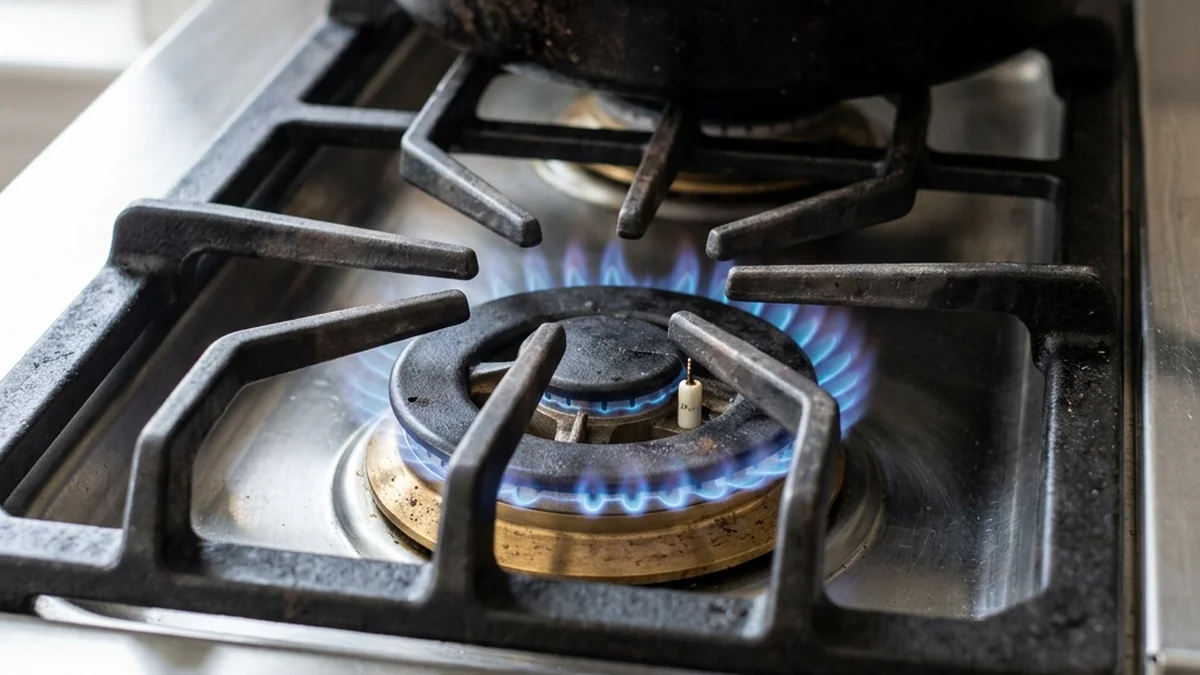
Wolf’s primary engineering triumph on the cooktop is its **Dual-Stacked Sealed Burner** design. Unlike single-tier burners that adjust heat by turning down one ring of flame, Wolf burners feature two separate tiers of flame ports stacked vertically on a solid brass burner stem.
High-Heat Output (Upper Tier)
The upper tier of ports delivers high BTU performance — reaching up to 20,000 BTUs on front burners (and 15,000 to 18,000 BTUs on rear burners). When turned to High, the upper tier fires vigorously, bringing heavy stocks to a rolling boil and maintaining high searing temperatures when cold proteins hit a heavy cast-iron pan.
Low-Heat Simmer Accuracy (Lower Tier)
When you rotate the knob past Medium down to Simmer, the upper flame tier shuts off completely, and gas routes exclusively through the lower tier. This lower port ring delivers a ultra-gentle heat output of just **300 BTUs** (approx. 100°F to 110°F).
Because the lower tier operates continuously without cycling on and off (unlike electric or competing gas burner systems), you can melt delicate chocolate, hold barnaise sauce for hours, or simmer rice without scorched bottoms or water baths. This simmer precision is widely considered the best in the luxury appliance industry.
Oven Baking & Roasting Performance
The cooking cavity performance differs noticeably depending on whether you select an All-Gas or Dual Fuel range.
All-Gas Infrared Broiling & Moist Heat
In All-Gas GR models, the oven cavity uses a primary 30,000 BTU gas burner underneath a porcelain floor baffle. Because natural gas combustion releases moisture as a byproduct, gas ovens maintain higher relative humidity inside the cavity. This environment prevents turkeys, prime rib, and braised dishes from drying out during long roasts.
The ceiling of the all-gas oven houses an **18,000 BTU Infrared Broiler**. The ceramic tile broiler plate glows radiant orange within 90 seconds, producing direct radiant heat that sears steaks and browns casseroles evenly across full baking sheets.
Dual Fuel VertiCross Convection System
In Dual Fuel DF models, Wolf replaces standard rear convection fans with the **VertiCross Convection System**. Two vertical blower columns run along the back corners of the oven wall, blowing heated air horizontally across every rack level.
This eliminates the need to rotate cookie sheets halfway through baking. Multiple racks of pastries or artisan loaves brown at identical rates. Dual Fuel models also include full-extension ball-bearing racks that slide smoothly even when supporting 50-lb cast-iron Dutch ovens.
Build Quality, Materials & Long-Term Reliability
Wolf appliances are manufactured in Fitchburg, Wisconsin, using heavy-gauge 304 stainless steel, seamless welded door corners, and heavy porcelain-coated cast-iron grates. Sub-Zero acquired Wolf’s residential line in 2000, bringing Sub-Zero’s rigorous commercial quality control to range production.
Key Build Highlights
- Heavy-Gauge Cast-Iron Grates: Porcelain-coated continuous grates allow heavy pots to slide smoothly across burners without lifting.
- Seamless Burner Pan: One-piece black porcelain burner pan catches spills and resists acid etching from tomato sauce or lemon juice.
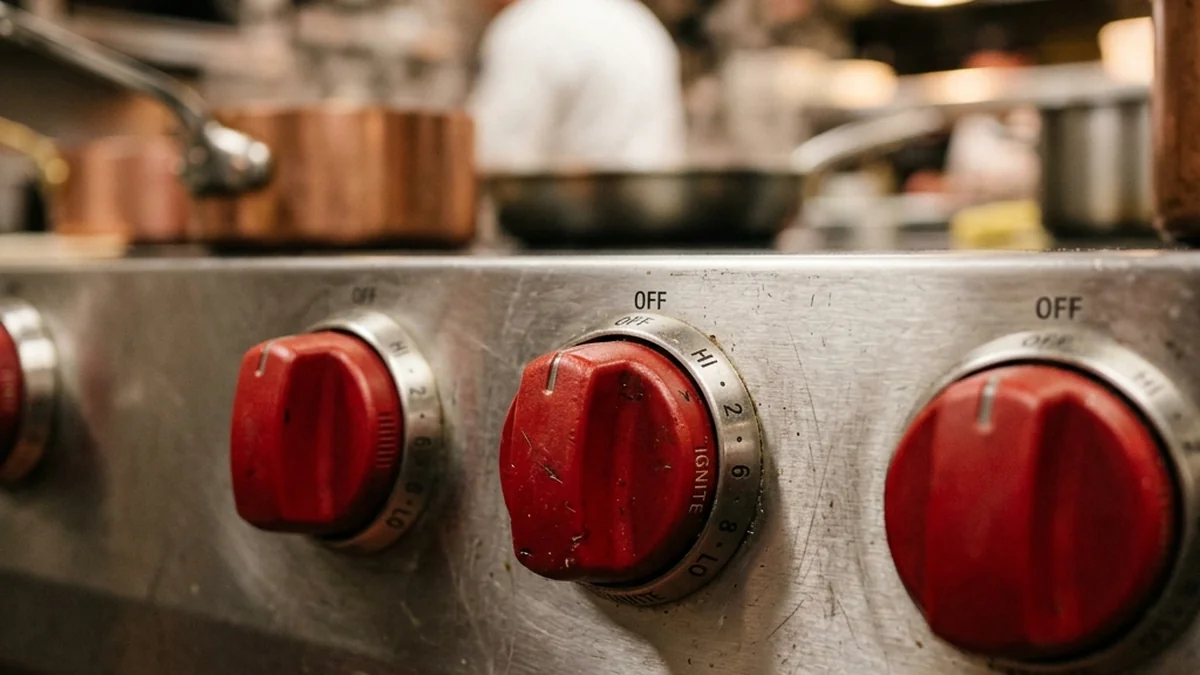
- Heavy Die-Cast Knobs: Control knobs are weighted and feature positive-detent stop positions for off, high, and simmer. (Red is standard; black or brushed stainless knobs are available at no extra charge upon ordering).
- Tested for 20 Years of Use: Wolf designs and factory-tests its range components to withstand 20+ years of daily home cooking.
If you ever encounter igniter clicking or flame height concerns on gas appliances, review our troubleshooting guides on how to fix a red flame on a gas stove and how to adjust a gas stove high flame.
Wolf vs. Viking vs. Thermador: Range Comparison
Wolf competes directly with **Viking** and **Thermador** in the pro-style luxury market. Here is how key specifications compare across flagship 36-inch range offerings:
| Comparison Criteria | Wolf (Dual Fuel / All-Gas) | Viking (7 Series / 5 Series) | Thermador (Pro Harmony / Grand) |
|---|---|---|---|
| Max Burner Output | 20,000 BTU | 23,000 BTU (7 Series) | 18,000 BTU |
| Lowest Simmer Output | 300 BTU (Continuous) | 1,000 BTU (VariSimmer) | 375 BTU (ExtraLow Cycling) |
| Burner Architecture | Dual-Stacked Sealed Brass | Elevation / VSH Sealed | Pedestal Star Burner |
| Oven Convection Tech | Dual VertiCross Convection | ProFlow Convection | Third-Element Convection |
| Infrared Broiler | 18,000 BTU (Gas Models) | 1,500°F Gourmet-Glo | Electric Broiler |
| Starting Price (36-inch) | $8,200 (Gas) / $11,800 (DF) | $7,800 (5S) / $11,500 (7S) | $7,200 (Harmony) / $10,500 (Grand) |
Where Wolf Wins
Wolf holds a definitive advantage in **simmer control** (continuous 300 BTU without cycling on and off) and **oven temperature consistency** via the VertiCross system. For bakers and sauce chefs, Wolf is unmatched. To see how Viking compares in detail, read our Viking gas range review.
Where Competitors Hold an Edge
Viking 7 Series ranges deliver higher peak raw BTU power (23,000 BTUs vs. 20,000 BTUs) and offer 15+ custom color finishes. Thermador offers attractive promotional packages (such as free dishwashers or ventilation hoods when buying range bundles).
Which Wolf Range Model Should You Buy? (Size & Layout Guide)
Selecting the right Wolf range configuration depends on your kitchen footprint, electrical service, and cooking habits.
1. The 30-Inch Space (Wolf GR304 / DF304)
Ideal for standard 30-inch cutout replacements. Features 4 dual-stacked burners (up to 20,000 BTUs) and a 4.6 cu. ft. convection oven. A great entry point into Sub-Zero/Wolf ownership.
2. The 36-Inch Sweet Spot (Wolf GR366 / DF366 / DF364G)
The most popular size for luxury kitchen remodels. Available as a full 6-burner layout or a 4-burner configuration with an integrated **15,000 BTU infrared steel griddle** or charbroiler.
3. The 48-Inch & 60-Inch Culinary Statement (DF486G / DF606CG)
Designed for expansive kitchens and serious entertaining. Features a double-oven layout (primary 5.2 cu. ft. oven paired with an 18-inch secondary companion oven) and custom cooktop choices including double griddles, charbroilers, or French top accessories.
Frequently Asked Questions
Where are Wolf gas ranges manufactured?
Wolf gas ranges are manufactured and assembled in Fitchburg, Wisconsin, USA, in dedicated production facilities owned by Sub-Zero Group, Inc.
Can I get a Wolf range without the red knobs?
Yes. While red knobs are Wolf’s signature look, you can specify black or brushed stainless steel knobs at no extra cost when ordering your range, or purchase replacement knobs separately.
What is the difference between Wolf All-Gas and Dual Fuel ranges?
All-Gas (GR Series) ranges use gas for both burners and oven, providing moist heat ideal for roasting and a gas infrared broiler. Dual Fuel (DF Series) ranges use gas burners with a 240V electric oven featuring VertiCross convection, touchscreen controls, and self-cleaning cycles.
How low can a Wolf gas burner simmer?
Wolf’s dual-stacked burners can dial down to a continuous 300 BTU output on the lower flame tier, holding liquids around 100°F to 110°F without flame cycling on and off.
Can a Wolf gas range operate during a power outage?
On All-Gas (GR) models, top surface burners can be ignited manually with a match during a power failure. On Dual Fuel (DF) models, surface burners can also be lit manually, but the electric oven and touchscreen controls require electrical power.
How long do Wolf gas ranges typically last?
Wolf designs and tests its ranges for a 20-year lifespan under heavy residential use. Heavy-gauge stainless steel construction and brass burner components ensure long-term durability.
Please Write Your Comments