Types of Gas Stove Flames and Their Meanings
Updated: 13 Feb 2025
1784
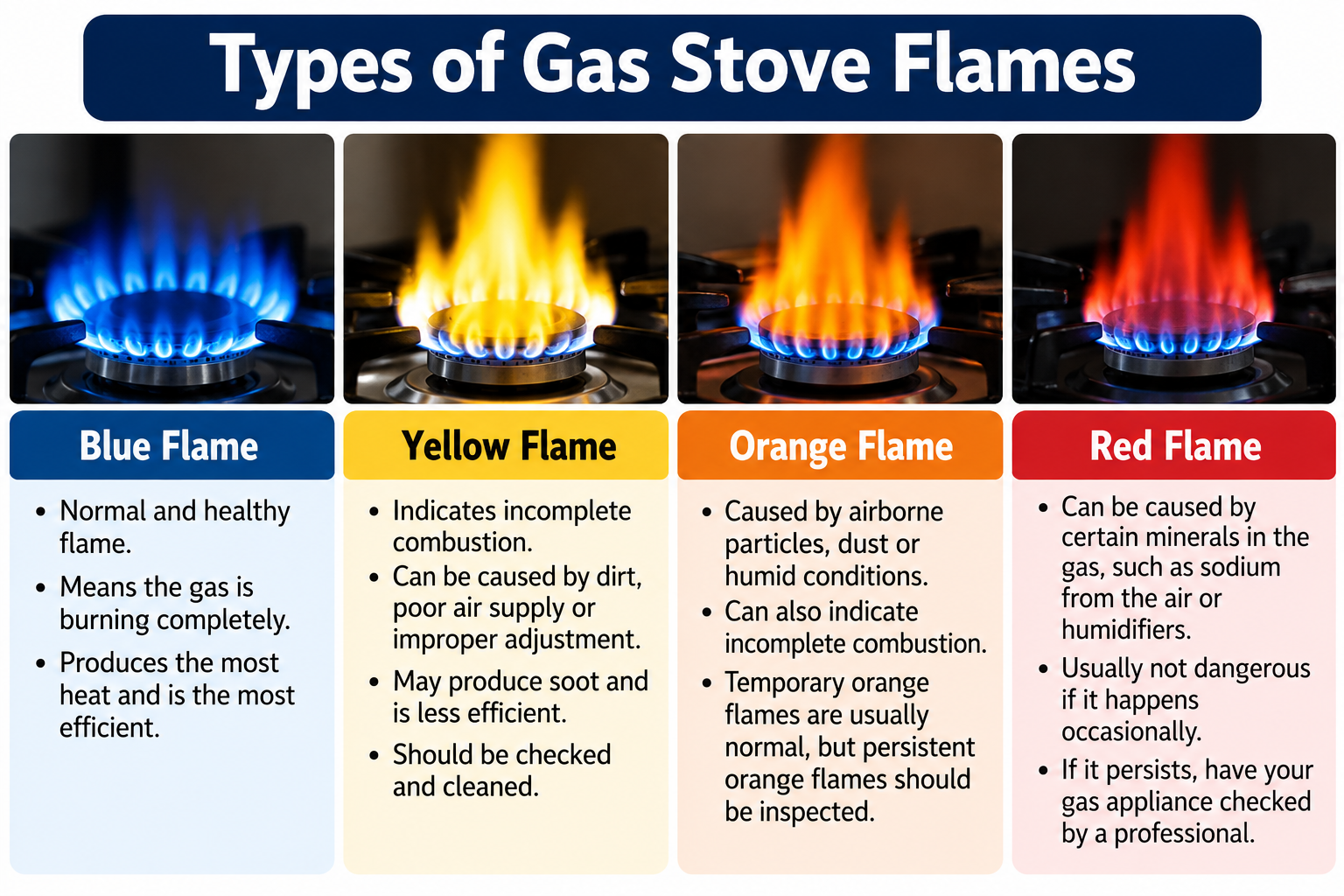
Gas stove flame colors can tell you a lot about how a burner is operating. A properly operating natural-gas burner typically produces a steady blue flame, while propane (LP) flames may have small yellow tips. Persistent yellow, orange, red, or uneven flames can sometimes point to a dirty burner, incorrectly positioned burner cap, airflow issue, or another problem that needs attention.
Not every color change means something is wrong. For example, minerals in the air, dust, or an ultrasonic humidifier can temporarily cause orange or reddish flames. That’s why flame color should be considered together with other warning signs such as soot, unusual flame height, instability, or poor burner performance.
In this guide, we’ll explain the different types of gas stove flames and their meanings, including blue, yellow, orange, and red flames. You’ll also learn which flame colors can be normal, what you can safely check yourself, and when the stove should be inspected by a qualified gas-appliance technician.
Understanding Gas Stove Flames
Understanding the Types of Gas Stove Flames can help you recognize changes in burner performance, identify unusual flame colors, and determine when your stove may need attention.
The Role of Oxygen and Fuel in Flame Formation
For a gas stove to work efficiently, it needs the right balance of fuel and oxygen. Too much or too little of either can affect how the flame burns.
- Proper Balance (Blue Flame): When the right amount of gas and oxygen mix, the flame burns completely, producing a stable, blue-colored flame. This means your stove is working efficiently.
- Too Little Oxygen (Yellow or Orange Flame): If there isn’t enough oxygen, the gas doesn’t burn completely, leading to a yellow or orange flame. This can create soot and waste fuel.
- Too Much Oxygen (Weak or Flickering Flame): Excess airflow can cause weak or unstable flames, making cooking inefficient.
Factors That Influence Flame Color and Intensity
Several factors can change how your gas stove flame looks:
- Burner Cleanliness: Dirt or grease buildup can block burner ports, affecting gas flow.
- Air Supply: Poor ventilation or blocked air vents can reduce oxygen levels, leading to improper combustion.
- Gas Quality: Impurities in the gas can cause unexpected color changes.
- Regulator Issues: If the gas pressure is too high or too low, it can change flame intensity.
By understanding these factors, you can ensure your gas stove operates safely and efficiently, providing consistent heat for cooking while preventing gas waste or safety risks.
Types of Gas Stove Flames and Their Meanings
Gas stove flames are more than just a visual cue; they indicate how efficiently your stove is burning fuel and whether there are any underlying issues. A well-functioning gas stove should produce a steady blue flame, but variations in color, size, and intensity can signal problems that need attention.
Below, we explore different types of gas stove flames, what they mean, and how to fix potential issues.
1. Blue Flame (Ideal Flame)
What It Means
A steady blue flame is generally normal for a natural-gas stove and indicates that the burner is receiving an appropriate mixture of gas and air. Propane (LP) burners may normally have blue flames with slightly yellow tips.
If the flame becomes mostly yellow, unusually large, uneven, noisy, or unstable, check the burner cap and accessible burner ports according to the manufacturer’s instructions. If the problem continues, have the stove inspected by a qualified gas-appliance technician.
Characteristics
- Steady, intense blue color.
- No flickering, sputtering, or color variations.
- Consistently strong without excess noise or yellow tips.
What to Do
If your stove flame is completely blue, your stove is functioning properly. No action is needed. However, regular burner cleaning and maintenance will help ensure long-term efficiency and safety.
2. Yellow or Orange Gas Flame :
What It Means
A mostly yellow gas stove flame can indicate that the burner is not operating normally. Possible causes include a dirty or clogged burner, an incorrectly positioned burner cap, or a problem with the stove’s gas or air supply.
However, some color variation can be normal. Propane (LP) burners may have slightly yellow tips, while airborne particles or minerals from an ultrasonic humidifier can temporarily make a flame appear orange or reddish.
If the flame remains mostly yellow, produces soot, is unusually large or unstable, or does not improve after the burner has cooled and the removable burner parts have been checked according to the manufacturer’s instructions, have the appliance inspected by a qualified gas-appliance technician.

Characteristics
- A mostly yellow flame instead of a steady blue flame.Flames may appear uneven, unstable, or unusually large.Soot or black residue may appear on cookware.Occasional orange or reddish coloration can also be caused by airborne particles or minerals and does not necessarily indicate a burner problem.
Possible Causes
- Burner cap is not seated correctly.Burner openings are dirty or obstructed.The appliance is not configured correctly for the type of gas being used.Airborne minerals, including those released by some ultrasonic humidifiers, are temporarily changing the flame color.A persistent abnormal flame may indicate a problem that requires professional service.
What To Do
Turn the burner off and allow it to cool completely. Check that the removable burner cap is seated correctly and clean removable burner parts only according to the stove manufacturer’s instructions.
If the flame remains mostly yellow, unusually large, unstable, or produces soot after these basic checks, stop troubleshooting and have the stove inspected by a qualified gas-appliance technician.
GE says a normal burner is generally blue or blue with yellow tips, while long, bright-yellow flames aren’t normal; it also notes that temporary orange coloration can result from particles in the gas or air.
3. Red or Unusual Gas Stove Flame
What It Means
A red or reddish-orange gas stove flame does not automatically mean carbon monoxide is present. Temporary orange or reddish coloration can sometimes result from particles or minerals in the surrounding air.
However, a flame that remains an unusual color—especially when accompanied by soot, a mostly yellow flame, instability, or abnormal burner performance—should be investigated. A properly operating natural-gas burner normally produces a mostly blue flame, while some yellow tipping can be normal with propane (LP). GE Appliances
Warning Signs
- Persistent yellow, orange, or unusual flame coloration
- Black soot around the burner or on cookware
- Flames that are unusually large or unstable
- Burner performance that does not return to normal after basic cleaning and correct burner-cap placement
What to Do
Turn the burner off and allow it to cool. Follow the manufacturer’s instructions for checking and cleaning removable burner components. If abnormal flames or soot continue, contact a qualified gas-appliance professional rather than attempting to adjust gas-pressure or combustion components yourself. GE similarly recommends professional service for fully yellow flames or soot. GE Appliances
A working carbon-monoxide alarm should be installed according to its manufacturer’s instructions. Do not rely on flame color to detect carbon monoxide.
4. Large or Noisy Gas Stove Flames
What It Means
A gas stove flame that is unusually tall, noisy, or extends beyond the bottom of the cookware may indicate that the burner is not operating correctly. Possible causes include incorrectly positioned burner components, clogged burner openings, or an appliance that is not properly configured for its gas supply.
Warning Signs
- Flames that are unusually tall or difficult to control
- Flames extending beyond the bottom of the cookware
- Persistent yellow coloration or soot
- Unusual roaring, hissing, or unstable burner operation
What to Do
Turn the burner off and allow it to cool. Check that the removable burner cap is clean, correctly positioned, and seated flat according to the manufacturer’s instructions. Accessible burner openings can also be checked and cleaned following the appliance manual.
If the flame remains unusually high or noisy, have the stove inspected by a qualified gas-appliance technician. Do not attempt to adjust the gas regulator, gas valve, or other gas-supply components yourself.
GE specifically says the flame should not extend up the sides of the cookware, and notes that excessively high flames can be associated with an incorrect natural-gas/LP conversion. GE Appliance
5. Weak or Small Gas Stove Flames
What It Means
A weak or unusually small gas stove flame can result from dirty or blocked burner openings, an incorrectly positioned burner cap, or another issue affecting the burner or gas supply. Small flames may cause slow or uneven heating and may have difficulty staying lit.
Warning Signs
- Flames are noticeably smaller than normal
- Uneven flame around the burner
- Burner has difficulty staying lit
- Cooking takes noticeably longer than usual
What to Do
Turn the burner off and allow it to cool completely. Check that the removable burner cap is clean, correctly positioned, and seated properly according to the manufacturer’s instructions. Clean accessible burner openings only as directed in the appliance manual.
If the flame remains unusually weak after basic cleaning and correct burner-cap placement, have the stove inspected by a qualified gas-appliance technician. Do not attempt to adjust the gas regulator, gas valve, gas pressure, or gas-supply components yourself.
6. Flickering or Unstable Gas Stove Flames
What It Means
Flickering or unstable flames indicate airflow disturbances or inconsistent gas supply. This can affect cooking performance and maA gas stove flame that repeatedly flickers, changes height, or becomes unstable may be affected by airflow around the stove, an incorrectly positioned burner cap, dirty burner openings, or another burner or gas-supply issue.
An occasional brief movement of the flame can be normal. However, a flame that remains unstable or repeatedly goes out should be investigated.
Warning Signs
- Flame repeatedly flickers or changes height
- Flame becomes uneven around the burner
- Burner has difficulty staying lit
- Flame remains unstable after the burner cap has been correctly positioned
What to Do
Turn the burner off and allow it to cool. Check that the removable burner cap is clean, correctly positioned, and seated flat according to the manufacturer’s instructions. Also make sure strong drafts are not blowing directly across the burner.
If the flame continues to flicker, becomes difficult to control, or repeatedly goes out, stop using that burner and have the appliance inspected by a qualified gas-appliance technician.
Do not attempt to adjust the gas pressure, regulator, gas valve, or other gas-supply components yourself.
Why Gas Flame Color Matters
Gas stove flame color can provide useful clues about how a burner is operating. A properly operating natural-gas burner typically produces a mostly blue flame, while some propane (LP) burners may normally show yellow tips. Temporary orange coloration can also occur because of particles or minerals in the surrounding air.
Comparing the types of gas stove flames can help you recognize normal burner operation and spot unusual changes that may require attention.
Persistent yellow flames, soot, unusual flame patterns, or other changes in burner performance may indicate that the burner needs cleaning, correct burner-cap placement, or professional inspection.
1. Flame Color Can Reveal Burner Problems
A mostly blue, steady flame is generally normal for a natural-gas burner. A persistent mostly yellow flame, especially when accompanied by soot or unstable burner operation, can indicate a combustion or burner problem.
Flame color alone, however, cannot tell you whether carbon monoxide is present. Carbon monoxide is colorless and odorless, so a properly installed carbon-monoxide alarm is important in homes with fuel-burning appliances. U.S. Consumer Product Safety Commission
2. Flame Appearance Can Affect Burner Performance
Changes in flame height, stability, or color can indicate that the burner is not operating normally. Dirty burner openings or an incorrectly positioned burner cap can also affect burner performance.
If basic cleaning and correct burner-cap placement do not restore normal operation, have the stove inspected by a qualified gas-appliance technician rather than attempting to adjust gas-supply components yourself.
3. Soot Is a Warning Sign
Persistent soot on cookware or around the burner should not be considered normal. If soot continues after the removable burner components have been cleaned and correctly positioned according to the manufacturer’s instructions, stop using the affected burner and arrange professional service.
GE, for example, recommends contacting the gas supplier or obtaining service when a range has fully yellow flames or soot.
How to Maintain Proper Gas Stove Flames
Regular cleaning and correct burner assembly can help a gas stove operate properly. Always follow your stove manufacturer’s instructions because burner designs and cleaning procedures vary by model.
1. Keep Burner Components Clean
Food, grease, and debris can interfere with burner performance. Once the stove is off and completely cool, clean removable burner components according to the owner’s manual. Make sure all components are completely dry and correctly positioned before using the burner again.
GE recommends regular burner cleaning and making sure burner heads and caps are properly seated after cleaning. GE Appliances
2. Check the Burner Cap Position
An incorrectly positioned burner cap can cause uneven flames or ignition problems. After cleaning, make sure the cap matches the correct burner and sits flat and securely in its proper position.
If repositioning and basic cleaning do not correct an unusual flame, have the appliance inspected rather than attempting internal adjustments. GE Appliances
3. Use Proper Kitchen Ventilation
Use your kitchen ventilation system when cooking with gas. When possible, an exhaust hood that vents outdoors can help reduce exposure to combustion pollutants produced during cooking.
The U.S. Consumer Product Safety Commission recommends using an exhaust fan vented outdoors over gas stoves. U.S. Consumer Product Safety Commission
4. Don’t Adjust Gas-Supply Components Yourself
If flames remain unusually yellow, high, noisy, unstable, or produce soot after basic cleaning and correct burner-cap placement, the stove may require professional diagnosis.
Do not attempt to adjust the gas regulator, gas valve, air shutter, or other gas-supply components yourself. Contact a qualified gas-appliance technician, your appliance service provider, or the gas supplier as appropriate. GE recommends professional attention for fully yellow flames or soot. GE Appliances
5. Know When to Stop Using the Burner
Stop using the affected burner and arrange professional service if abnormal flames continue after basic cleaning and correct reassembly, if soot repeatedly appears, or if the burner does not operate normally.
A working carbon-monoxide alarm is also an important safety measure in homes with fuel-burning appliances. The CPSC recommends CO alarms on every level of the home and outside sleeping areas
Understanding the types of gas stove flames can help you recognize normal burner operation and identify changes that may require attention.
Conclusion
Gas stove flames can provide useful clues about burner operation. A properly operating natural-gas burner generally produces a mostly blue, steady flame, while some propane burners may normally have yellow tips. Temporary orange coloration can also occur because of particles in the surrounding air.
Persistent yellow flames, soot, unusually high or unstable flames, or other changes in burner performance deserve attention. Start by following the manufacturer’s instructions for basic burner cleaning and correct burner-cap placement. If the problem continues, contact a qualified gas-appliance technician or your gas supplier rather than attempting to adjust gas-supply components yourself.
Remember that flame color cannot tell you whether carbon monoxide is present. A properly installed and maintained carbon-monoxide alarm provides an important layer of protection in homes with fuel-burning appliances.
FAQs About Gas Stove Flames
1. What color should a gas stove flame be?
A natural-gas burner normally produces a mostly blue, steady flame. Some propane (LP) burners may have yellow tips. Check your stove’s owner’s manual because normal flame appearance can vary by appliance and fuel type.
2. Why is my gas stove flame yellow or orange?
Temporary orange coloration can sometimes result from particles in the air. However, a persistent mostly yellow flame—particularly with soot or abnormal burner performance—may indicate a burner, airflow, gas-pressure, or other appliance issue. Follow the manufacturer’s cleaning instructions and seek professional service if the condition continues.
3. Does red or yellow flame mean carbon monoxide is present ?
Not necessarily. Flame color alone cannot determine whether carbon monoxide is present. Carbon monoxide is colorless and odorless, so use a properly installed CO alarm and have persistent abnormal burner operation inspected by a qualified professional.
CPSC states that CO cannot be seen or smelled and recommends CO alarms on every level of a home and outside sleeping areas.
4. How do I fix a weak or small gas flame?
Clean the burner, check the gas valve, and inspect the gas line for blockages or leaks.
5. What causes a noisy or large gas flame?
Excess gas flow or improper air mixing can cause a large, roaring flame. Adjust the gas regulator and air shutter to fix it.
Please Write Your Comments