LG Gas Range Review: Smart Features Meet Everyday Cooking
Updated: 12 Jun 2026
179
LG gas ranges are a strong choice for most households. They combine high-BTU power burners (17,000–20,000 BTU), consistently accurate oven temperatures, and Wi-Fi-enabled controls through the ThinQ app—all at prices ranging from around $800 to $2,000. Build quality and simmer performance are competitive at every price point.
LG Gas Range Overview & Model Lineup
LG has carved out a distinctive position in the gas range market by bundling smart-home connectivity and high-output burners into appliances that cost noticeably less than Bosch or Wolf equivalents. The current lineup spans three tiers that cover almost every kitchen budget and cooking style.
The entry-level LRG3061 series ($800–$1,000) is a no-frills 30-inch freestanding range with five sealed burners, a 5.4-cubic-foot oven, and basic electronic ignition. It lacks Wi-Fi and the power boil burner peaks around 17,000 BTU. For renters or buyers furnishing a first kitchen, it punches above its weight on durability.
The mid-range LRGL5825 and LRGS6338 series ($1,100–$1,500) add LG’s ThinQ Wi-Fi connectivity, a 20,000 BTU UltraHeat burner, and a 6.3-cubic-foot capacity oven with convection. This is the sweet spot that most households should consider—it covers serious cooking tasks without crossing into luxury-appliance pricing.
The InstaView LUG series ($1,600–$2,000) features a glass panel on the oven door that illuminates when you knock on it, LG’s ProBake Convection system, and an air-fry mode. The ProBake element is repositioned to the rear wall rather than the floor, which eliminates the traditional baking drawer and distributes heat more evenly. For households that bake frequently, the upgrade is worth serious consideration.
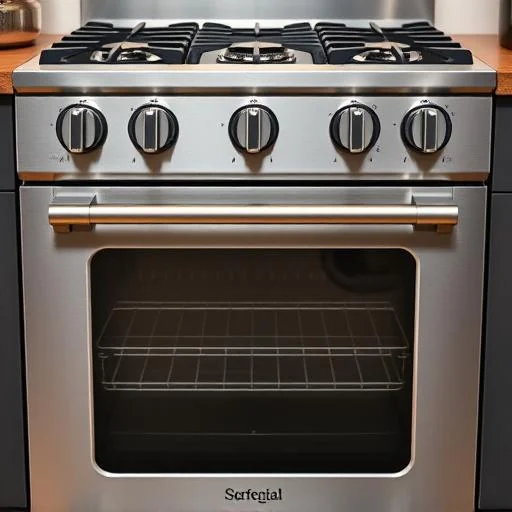
All current LG gas ranges ship with continuous cast-iron grates, which allow pots to slide smoothly across burners without lifting. Slide-in versions are also available at a roughly $200 premium and integrate flush with countertop surfaces for a built-in look. LG offers a matching ventilation hood through its own lineup, which simplifies installation when renovating a full kitchen.
For a broader look at how gas ranges fit into a modern kitchen, the ultimate guide to gas stoves covers fuel types, BTU ratings, and safety considerations in one place.
Burner Performance
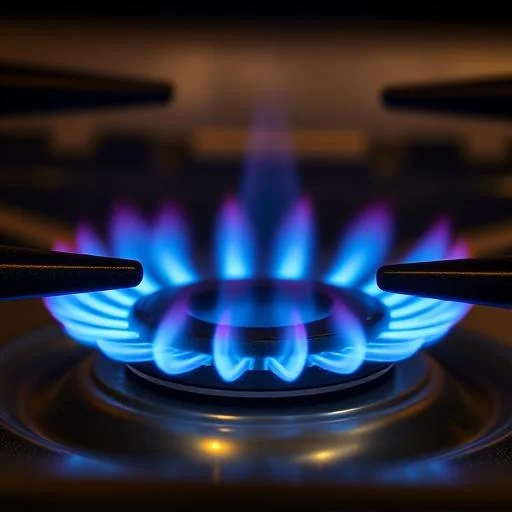
Burner output is where LG gas ranges most convincingly justify their price. The flagship UltraHeat burner reaches 20,000 BTU on mid- and upper-tier models, which is enough to bring a large stockpot to a rolling boil in around eight minutes—comparable to what dedicated high-output burners achieve on commercial-style ranges costing twice as much.
The five-burner layout on the 30-inch models places the power burner at the front-left position, where most cooks place their largest pan. A second high-output burner (around 15,000 BTU) sits at the rear-left for a second large vessel. The center oval burner on the InstaView series accepts a griddle accessory and runs at 9,500 BTU—sufficient for breakfast cooking but not a replacement for a dedicated griddle appliance.
Simmer performance is equally important and LG handles it well. The dedicated simmer burner on the right-rear position holds temperatures as low as roughly 140–150°F—low enough to keep a béchamel sauce warm without scorching. Some reviewers of competing brands note that their lowest setting still produces too much heat for delicate work; LG’s simmer control is a genuine differentiator at this price.
Ignition is reliable across the lineup. Sealed burners with electronic ignition light on first click in nearly all conditions. The continuous-grate design means spills are easy to wipe away without removing individual grate sections. Understanding how burner heat levels translate to cooking outcomes is covered in detail on the gas stove heat settings guide.
One area to watch: the center burner on base-level models tops out at around 9,500 BTU, which is adequate but not exceptional for a center position. If your cooking style involves large pans on the center burner frequently, consider stepping up to a mid-range model where the center position carries more output.
Oven & Baking Performance
The oven is where LG’s engineering investment shows most clearly. Standard models use a conventional broil-and-bake setup with the bake element at the floor and a broil element at the top. Mid- and upper-tier models add a convection fan, which reduces temperature variance and shortens cook times by roughly 25% compared to conventional bake.
The ProBake Convection system in InstaView models relocates the bake element to the rear wall, surrounding the convection fan. This eliminates the cold floor zone that conventional ovens develop and produces more uniform browning on baked goods. Multiple batches of cookies or sheet-pan vegetables come out with consistent color edge to edge—a result that requires more careful rack rotation on standard convection ovens.
Oven capacity ranges from 5.4 cubic feet on base models to 6.3 cubic feet on larger units. The 6.3 cubic-foot oven comfortably fits a large Thanksgiving turkey in a roasting pan with room for a side dish on the upper rack. Temperature accuracy, measured with an independent oven thermometer, typically falls within ±10°F of the set point—well within acceptable range for home baking.
Broil performance is strong. The broil element reaches temperature quickly and produces good searing on steaks and fish fillets. LG includes a two-position broil setting (high and low) on most models, which adds flexibility for thicker cuts that need more time under the element without burning the surface.
Self-cleaning is available in two forms: traditional high-heat self-clean (runs 2–4 hours at high temperature and burns off residue) and the newer EasyClean cycle, which uses steam and lower temperatures for a 10-minute cleaning pass. EasyClean works well on fresh spills but is less effective on baked-on grease; the full self-clean cycle remains necessary for heavily soiled ovens. If your oven door won’t close properly after a cleaning cycle, the guide to stove shutoff and reset procedures covers troubleshooting steps.
Smart Features & App Control
LG ThinQ integration is available on mid- and upper-tier models and connects the range to a home Wi-Fi network. The ThinQ app (iOS and Android) allows remote monitoring of oven temperature, timer controls, and push notifications when preheating is complete. For households that move between rooms while cooking, the ability to check oven status without walking back to the kitchen is a small but genuine convenience.
Preheating remotely is the most-used smart feature in practice. The oven can be started from the app while carrying groceries from the car, saving the 10–15 minutes a gas oven takes to reach cooking temperature. The app requires an account login and occasional firmware updates, both minor inconveniences.
Voice control works through Amazon Alexa and Google Home. Commands such as “set oven to 375 degrees” and “turn off the oven” execute reliably. The integration covers only the oven—burner controls remain manual-only, which is standard across all major brands for safety reasons.
LG has published a compatibility list for ThinQ and notes which features require which firmware versions. The LG ThinQ appliance compatibility page covers the full range of supported functions by model number, which is worth checking before purchase if smart integration is a priority.
One limitation worth noting: the ThinQ app does not allow the oven temperature to be set above the range’s built-in maximum, and the app will not override any child-lock or sabbath-mode settings applied at the physical control panel. These are sensible safety constraints rather than design failures.
Design & Cleaning
LG gas ranges are available in three finishes: stainless steel, black stainless steel, and printprint-resistant black stainless. The print-resistant coating performs as advertised on most fingerprints and smudges from dry hands, though cooking grease still requires a wipe-down. The black stainless finish carries a small price premium ($50–$100) and pairs well with dark cabinet hardware.
Control placement varies by product line. Freestanding models use front-facing knob controls on the panel below the display, which keeps the backsplash area clear but places burner controls within reach of young children. Slide-in models move the control panel to the front surface of the range, eliminating the gap between the range and adjacent countertops where food debris accumulates.
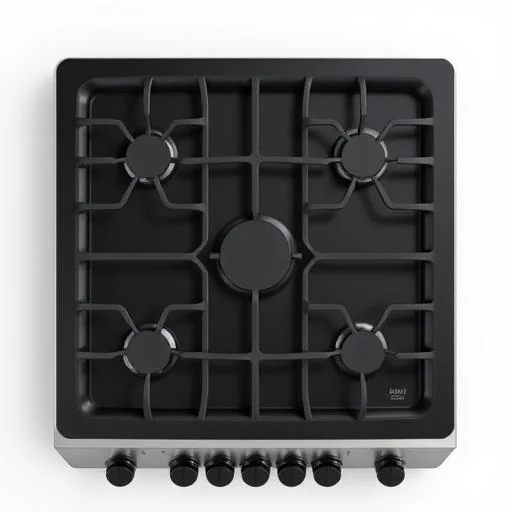
The continuous cast-iron grates are the headline cleaning feature. Rather than lifting individual grates around each burner, the entire cooktop surface is one unified piece of cast iron. Spills stay on the grate surface rather than pooling at the burner ports, and the grates can be removed as one unit and soaked in the sink for heavy cleaning. Cast iron requires occasional re-seasoning (a light coat of vegetable oil after thorough cleaning) to prevent surface rust, but this is a five-minute maintenance task rather than a burden.
The oven interior uses a porcelain enamel coating that resists staining and wipes down easily when warm. Oven racks are smooth-glide on InstaView models, extending fully without tipping—a meaningful convenience when checking heavy roasting pans. Standard models use fixed-position racks that are stable but require both hands to pull out safely under load.
Pros, Cons & Who It’s For
Every range involves trade-offs. Understanding where LG excels and where it falls short clarifies whether it is the right choice for a given kitchen.
Where LG gas ranges stand out:
- High-output burner (20,000 BTU) at a mid-range price — comparable brands charge $200–$400 more for equivalent output
- Reliable simmer performance — consistent low-heat control for delicate sauces and chocolate melting
- Genuine ThinQ integration — remote preheat and notifications work as advertised, not as marketing claims
- Continuous cast-iron grates — simpler cooktop cleaning than multi-section grate designs
- ProBake Convection on InstaView models — noticeably more even baking than standard rear-fan convection
- Strong warranty — LG offers a one-year parts-and-labor warranty with extended coverage on specific components
Where LG gas ranges fall short:
- Center burner output on base models is modest — 9,500 BTU limits center-burner versatility
- ThinQ app requires account creation and occasional firmware updates — minor friction for less tech-comfortable users
- Cast-iron grates need occasional re-seasoning — small but real maintenance compared to porcelain-coated grates
- InstaView glass panel can show smudges — looks striking when clean, requires regular wiping
- No built-in griddle on most models — the center oval burner accepts an accessory griddle but it is sold separately
Best fit: LG gas ranges make most sense for households that cook frequently, value high burner output and even oven temperature, and want smart-home connectivity without paying the premium that Samsung’s Bespoke or GE’s Profile line commands. They are also a strong choice for households replacing an older basic range and wanting a meaningful capability upgrade without a full kitchen renovation budget.
If induction cooking is under consideration alongside gas, the comparison of induction vs. traditional cooking stoves covers where each technology has an advantage.
Households concerned about adjusting flame output for specific cooking tasks should review the guide to adjusting gas stove flame height, which covers both normal adjustment and when unusually high or low flames signal a burner issue.
LG vs. GE vs. Samsung: Side-by-Side
LG’s closest competitors at the $1,000–$1,600 mid-range are GE’s 30-inch freestanding gas range and Samsung’s NX60 series. The table below compares the key specifications at equivalent price points.
| Feature | LG LRGL5825 | GE JGBS66 | Samsung NX60T8711SS |
|---|---|---|---|
| Price range | $1,100–$1,300 | $900–$1,100 | $1,200–$1,500 |
| Max burner output | 20,000 BTU | 18,000 BTU | 22,000 BTU |
| Oven capacity | 6.3 cu ft | 5.0 cu ft | 6.0 cu ft |
| Convection | Yes (fan-assisted) | Yes (fan-assisted) | Yes (dual fan) |
| Wi-Fi / App control | ThinQ (Alexa, Google) | SmartHQ (Alexa, Google) | SmartThings (Alexa, Google) |
| Continuous grates | Yes (cast iron) | No (individual sections) | Yes (cast iron) |
| Self-clean | Steam + high-heat | High-heat only | Steam + high-heat |
| Air-fry mode | InstaView models only | No | Yes |
| Slide-in option | Yes (+$200) | Yes (+$150) | Yes (+$200) |
GE wins on entry price and is the right choice for buyers who do not need smart features or the highest burner output. Samsung matches LG on smart connectivity and adds a higher-output power burner on select models, but its SmartThings ecosystem is more complex to configure. LG offers the best overall balance of oven size, burner output, and connectivity at the $1,100–$1,300 price point.
For a deeper look at how gas stoves compare as a category, the complete gas stove buying guide covers sizing, BTU ratings, fuel line requirements, and brand positioning in one reference.
Frequently Asked Questions
Is the LG gas range reliable long-term?
LG gas ranges have a solid reliability record in the $1,000–$1,500 segment. Common service calls in the first five years typically involve igniter replacement (a straightforward repair) or control board issues on Wi-Fi-connected models. LG’s one-year full warranty and available extended service plans provide coverage for the most failure-prone period.
Does the LG gas range require a special gas connection?
LG gas ranges ship configured for natural gas and include an LP conversion kit for propane installations. The connection requires a standard 3/4-inch NPT gas supply line and a dedicated shutoff valve within six feet of the range. Installation must be performed by a licensed professional in accordance with NFPA 54. Do not reuse existing flexible connectors from previous appliances.
How accurate is the LG oven temperature?
LG ovens typically run within ±10–15°F of the set point, which is standard for residential gas ranges. A $10 oven thermometer placed on the center rack is the best way to verify your specific unit’s calibration. LG ovens allow user-initiated temperature offset adjustments (usually ±35°F) through the control panel settings menu if a systematic bias is confirmed.
Can I use the LG ThinQ app without a smart home hub?
Yes. The ThinQ app connects directly to your home Wi-Fi router using 2.4 GHz. No separate hub, bridge, or smart home controller is required. Alexa and Google Home integration are optional add-ons; the core app functions (remote preheat, temperature monitoring, push notifications) work independently of any voice assistant.
What is the difference between LG EasyClean and self-clean?
EasyClean uses steam and lower temperatures in a 10-minute cycle—effective for fresh spills and light grease but not for baked-on residue. Traditional self-clean heats the oven to approximately 900°F for 2–4 hours, incinerating all residue to ash that can be wiped out when cool. For ovens used several times per week, the full self-clean cycle is necessary every few months.
How does LG compare to GE for gas ranges?
At equivalent price points, LG generally offers a larger oven cavity, higher maximum burner BTU, and more capable smart connectivity than comparably priced GE models. GE edges ahead on entry-level pricing and has a longer track record of service technician availability in rural areas. For most urban and suburban households, LG delivers more features per dollar at the $1,000–$1,500 tier.
Please Write Your Comments